
India’s energy story is changing faster than ever before. In 2026, the conversation is no longer just about reducing electricity bills or adopting sustainable practices—it is about building true energy independence. At the center of this transformation stands the rapid rise of Commercial & Industrial (C&I) solar EPC projects.
Factories, warehouses, textile units, food processing plants, data centers, logistics parks, and corporate campuses across India are increasingly shifting toward solar energy as a strategic business decision. Rising grid instability, fluctuating electricity tariffs, global sustainability commitments, and the push for domestic manufacturing have accelerated this movement.
For businesses, solar is no longer an “alternative” energy source. It has become an operational necessity.
As one of India’s emerging solar EPC companies, Rayzon Green is witnessing firsthand how C&I solar projects are helping industries gain greater control over their energy future while contributing to India’s broader clean energy ambitions.
India is among the world’s fastest-growing energy consumers. Rapid industrialization, urban expansion, digital infrastructure growth, and increased manufacturing activities have pushed electricity demand to record levels.
At the same time, industries are facing multiple challenges:
Traditional power dependency is becoming both financially risky and operationally limiting.
This is where C&I solar EPC projects are creating a major shift.
Businesses are moving from being passive electricity consumers to active energy producers.
Commercial & Industrial solar projects differ significantly from residential solar installations. These systems are designed for high energy consumption environments where efficiency, scalability, and long-term ROI matter most.
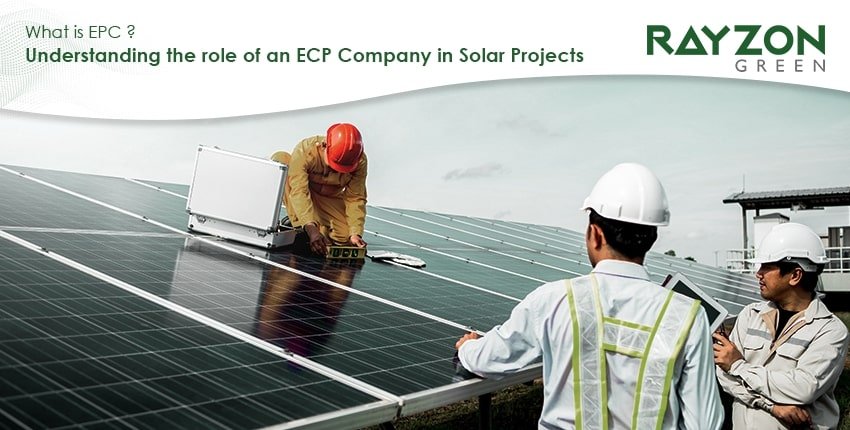
An EPC (Engineering, Procurement, and Construction) company handles the complete lifecycle of the solar project, including:
This end-to-end approach ensures industries can adopt solar energy without operational disruptions.
For businesses, it means one reliable partner manages the complete solar transition.
Electricity prices in India continue to rise across many industrial sectors. High consumption businesses are particularly vulnerable to unpredictable tariff revisions and peak demand penalties.
C&I solar systems allow industries to generate their own electricity during peak operational hours, significantly reducing dependence on conventional power sources.
The result:
In many industries, solar energy is now directly linked to competitiveness.
India’s manufacturing ecosystem is expanding rapidly under initiatives such as “Make in India” and production-linked incentive (PLI) schemes.
However, uninterrupted power remains essential for:
Grid interruptions or voltage fluctuations can lead to production losses and downtime.
C&I solar EPC projects, especially when integrated with energy storage solutions, provide greater energy reliability and operational stability.
For modern industries, energy security is becoming as important as supply chain security.
Global investors, customers, and supply chain partners are increasingly evaluating companies based on sustainability performance.
Businesses exporting products internationally are under pressure to demonstrate lower carbon footprints.
Solar adoption helps organizations:
In 2026, sustainability is not just a branding exercise—it is influencing business opportunities and market access.
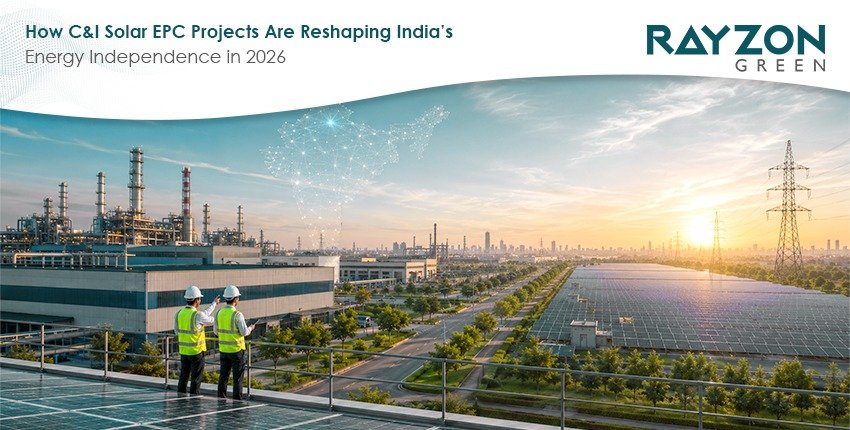
One of the biggest advantages of C&I solar projects is the utilization of unused rooftop spaces.
Industrial rooftops, warehouses, logistics centers, and commercial complexes offer massive solar generation potential.
Instead of leaving these surfaces underutilized, businesses are converting them into productive energy assets.
Benefits include:
This transformation is particularly important in densely populated industrial zones where land availability is limited.
The evolution of solar technology is also reshaping EPC project performance in 2026.
Modern C&I projects increasingly utilize:
These technologies enhance:
For industries with limited rooftop space but high energy demand, efficiency has become critical.
The concept of energy independence extends far beyond electricity generation.
It represents business resilience.
Companies that generate a substantial portion of their own power are less exposed to:
In an unpredictable global economy, energy self-reliance strengthens operational continuity.
Forward-thinking companies now view solar investment as a long-term risk management strategy.
India has set ambitious renewable energy targets, and achieving them requires strong participation from the commercial and industrial sectors.
Large-scale utility projects alone are not enough.
C&I solar adoption helps:
Every industrial rooftop converted into a solar power plant contributes to India’s larger clean energy mission.
In 2026, solar economics are becoming increasingly attractive for industries.
Several factors are contributing to faster adoption:
Businesses are achieving strong returns on investment while simultaneously reducing operational expenses.
For many industries, solar installations now deliver savings for 25 years or more.
Not all solar projects deliver the same results.
The success of a C&I solar installation depends heavily on EPC expertise.
A professionally executed project ensures:
Poorly designed systems can lead to generation losses, maintenance issues, and reduced ROI.
That is why businesses increasingly prefer experienced EPC partners capable of delivering customized, performance-driven solutions.
At Rayzon Green, the focus goes beyond installing solar panels.
The mission is to help industries build smarter, cleaner, and more energy-independent operations.
By combining engineering precision, quality-focused execution, and advanced solar technologies, Rayzon Green supports commercial and industrial businesses in achieving:
Every project is designed with the understanding that energy infrastructure is now a critical business asset.
India’s energy future is gradually shifting from centralized dependency to distributed generation.
Factories and commercial spaces are becoming micro energy hubs capable of producing clean electricity close to consumption points.
This transition will accelerate further with:
C&I solar EPC projects are laying the foundation for this next-generation energy ecosystem.
In 2026, C&I solar EPC projects are doing far more than powering buildings—they are reshaping how India thinks about energy independence.
Businesses are realizing that solar energy is not merely a sustainability initiative. It is a strategic investment in resilience, efficiency, and long-term competitiveness.
As industries continue to adopt clean energy at scale, they are helping India reduce dependence on conventional power sources while creating a more sustainable industrial economy.
The shift has already begun.
And the businesses investing in solar today are not just reducing costs—they are powering the future of India’s energy independence.
With trusted solar EPC partners like Rayzon Green, this future is becoming brighter, cleaner, and more self-reliant than ever before.