

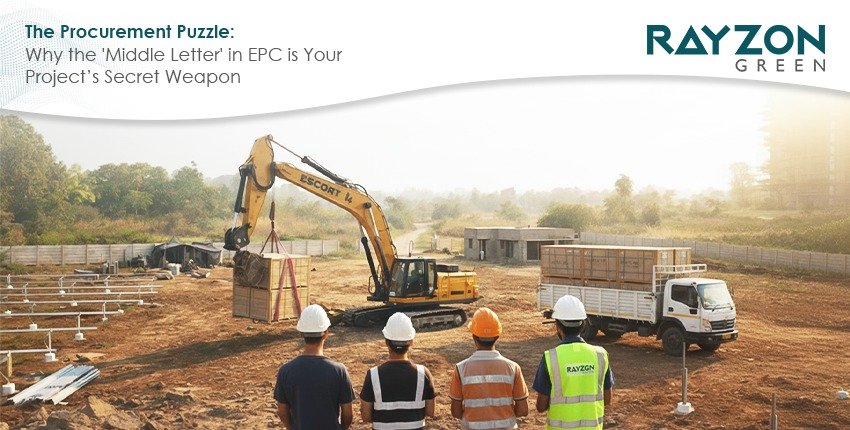
In the world of large-scale projects, especially in sectors like energy and infrastructure, the term EPC (Engineering, Procurement, and Construction) is commonly thrown around. While engineering and construction get most of the spotlight, procurement – the 'P' in EPC – often holds the key to a project’s success. Let’s break down why procurement is the unsung hero of EPC projects. the Engineering (how much power will it generate?) and the Construction (when will it be finished?). But there is a silent "middle child" in the EPC acronym that often determines whether a project succeeds or fails: Procurement.
At Rayzon Green, we believe that in a volatile global market, smart buying is just as important as smart building. Here is why the "P" in EPC is the most critical puzzle piece you probably haven't thought about. procurement is not treated as a simple purchasing activity. It is approached as a strategic function that shapes project quality, timelines, and long-term energy performance.
In many industries, procurement is often viewed as negotiating prices and placing orders. But in solar EPC projects, procurement is far more complex.
A solar plant includes multiple components such as:
Each component must meet strict technical standards, arrive at the right time, and integrate seamlessly into the project design.
One mismatch or delay can ripple through the entire project schedule.
For example, if inverter delivery is delayed by just a few weeks, installation teams may remain idle, timelines shift, and project costs rise. That’s why strong procurement planning ensures that every component arrives exactly when the engineering and construction teams need it.
Solar is a global industry. Components often travel through international supply chains, multiple vendors, and logistics networks before reaching the project site.
This means EPC companies must manage:
Without a strong procurement strategy, projects become vulnerable to supply disruptions and price volatility.
Companies that manage procurement strategically are able to lock in quality components early, stabilize project costs, and maintain predictable delivery timelines.
Why Procurement Directly Impacts Energy Generation
Here’s a factor many project owners overlook: procurement choices affect long-term plant performance.
Not all solar equipment performs the same way in real operating conditions. Selecting components only on price can lead to:
A thoughtful procurement process evaluates equipment not just by cost but also by:
At Rayzon Green, procurement decisions are aligned with the engineering team to ensure every component contributes to optimal system performance for decades.
In successful EPC projects, procurement and engineering cannot operate in isolation.
Design choices influence procurement needs, and supplier capabilities influence design flexibility. When these teams collaborate early, they can:
This integrated approach shortens project timelines and reduces unexpected costs.
Managing Risk Through Smart Procurement
Procurement also plays a major role in risk management.
Solar projects face several risks, including:
By building relationships with trusted suppliers and implementing strict quality checks, EPC companies can significantly reduce these risks.
Strong procurement practices ensure that every component installed in a solar plant meets both performance expectations and safety standards.
Procurement and the True Cost of a Solar Project
One of the biggest misconceptions in solar development is that the lowest upfront cost delivers the best project value.
In reality, a project built with carefully selected components and reliable suppliers often delivers higher lifetime energy output and lower operational costs.
Procurement teams must therefore think beyond purchase price and focus on total lifecycle value.
This includes evaluating:
When procurement is handled strategically, the result is not just a completed project—but a power plant designed for long-term reliability.
Engineering designs the system. Construction builds it.
But procurement ensures that the right technology, from the right partners, reaches the project at the right time.
In many ways, procurement acts as the bridge between design vision and real-world execution.
Companies that master this middle layer gain a powerful competitive advantage:
they deliver projects faster, control costs better, and ensure long-term performance.
As solar adoption accelerates across industries, projects are becoming larger and more complex. Supply chains are evolving, technologies are advancing, and timelines are tightening.
In this environment, procurement is no longer a back-office function.
It is a strategic capability that shapes project success.
At Rayzon Green, procurement is treated as a core pillar of the EPC process—ensuring that every solar project is built with quality components, reliable suppliers, and a long-term performance mindset.
Because sometimes, the most powerful part of a project lies right in the middle.