

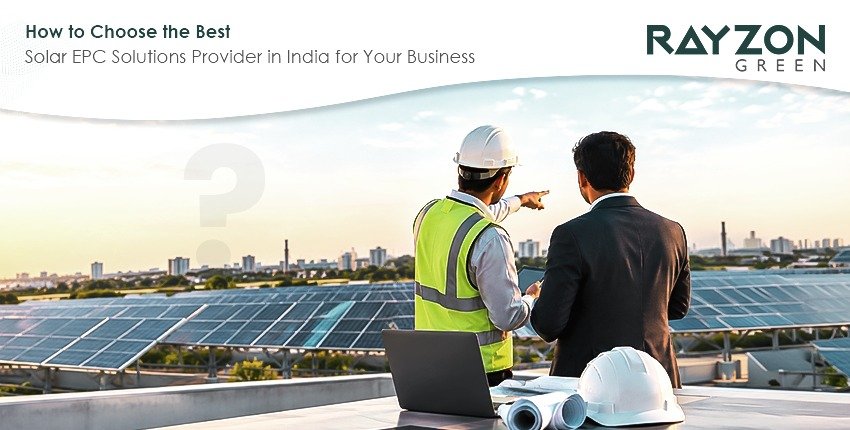
In the last decade, the solar energy sector in India has grown at a pace that few had predicted. While rooftop solar installations, ground-mounted solar power plants, and hybrid energy solutions are being popping up across industrial parks, commercial complexes, and even mid-sized factories that never imagined going solar would be financially practical. But here's the catch that most business owners discover only after they've started the process: the technology is only half the story. The other half — arguably the more important half - is who actually designs, procures, and builds your system. That's where finding the right Solar EPC Solutions Provider becomes the single most important decision in your entire solar journey.
If you've been researching this topic, you've probably already noticed that there's no shortage of companies claiming to be the best in the business. Some are genuinely capable. Others are little more than resellers who slap a fancy website together and outsource the actual engineering to whoever's cheapest that month. So how do you tell the difference? How do you choose a Solar EPC Solutions Provider that will actually deliver what they promise, on time, within budget, and without cutting corners on quality?
This guide walks through everything you need to know - practically, honestly, and without the marketing fluff.
EPC stands for Engineering, Procurement, and Construction. Basically, an EPC company takes care of the whole construction process, including designing, buying equipment, and erecting your PV installation.
By hiring one of the best solar EPC providers instead of three firms (one for design, one for equipment, and one for installation) to assemble your photovoltaic power plant, you can feel much safer about the quality of work. You will have only one contractor to blame if something goes wrong during the installation instead of three. In other words, it is critical to choose the right EPC partner for your business. Your PV power plant requires the EPC contractor’s expertise for the next 20–25 years.
Before discussing selection criteria, let's understand the context of the need. Electricity tariffs for commercial and industrial consumers have been rising steadily. Accelerated depreciation, government incentives, and net metering have significantly reduced the payback period of solar projects, sometimes lower than the projected five years of finance teams of corporations. Moreover, the demand from customers and investors for ESG-compliant portfolios is forcing companies to adopt solar energy to remain relevant.
However, these advantages are available only to those who have correctly installed solar panels. The quality of installed equipment, engineering, and maintenance directly impact the performance of the equipment. Thus, all these factors are in the hands of the contractors.
Request the Solar EPC company to showcase their previous projects, not just brochures. A credible Solar EPC Solutions Provider should be able to show you completed rooftops or ground mounted solar projects of size comparable to what you are considering. Ask how long these projects have been operational and ideally take up references from existing clients who can share their experience post-installation including inverter servicing and panel cleaning.
A significant difference lies between an organization that engineers their solar solutions in-house versus one that outsources this function. In-house engineering enables accurate quantum estimation, shading analysis and optimal utilization of your available roof-top or ground space to arrive at maximum yield potential for your solar project. While interviewing Solar EPC Companies, probe deeper into who actually engineers their solutions, not the sales team, but the engineer himself
Not all solar modules and inverters are created equal. A good EPC company partners with credible module and inverter manufacturers who have track record of long-term performance of their products. Reputable Solar EPC Solutions Providers will be transparent about the equipment being used instead of trying to keep it vague or even change suppliers to undercut competition on price.
Any EPC company that you are thinking of hiring needs to be financially stable. This helps ensure that they are around to support you through warranty and service claims. Solar EPC companies have gone bankrupt leaving solar owners stranded without any support after just a couple of years.
Solar PV modules require periodic cleaning and monitoring for optimal performance. Inverters may also need spares and servicing over the lifespan of the system. A good Solar EPC Company is able to offer a maintenance and monitoring package that includes remote diagnostics and field service staff. Find out from the Solar EPC Company about their operations and maintenance processes post-commissioning. Most companies that sell solar systems are great at selling, but not so much at operations and maintenance once the project is commissioned and the sales commission has been paid.
India has diverse solar policies across states and understanding the interplay of net metering, subsidies and regulations can be quite a challenge. An experienced Solar EPC Solutions Provider will manage the entire paperwork formalities, liaise with local DISCOMS and get the necessary approvals for your solar project.
Every business has different requirements based on their energy needs, rooftop configuration and budget requirements. Ask the Solar EPC Company about their recommendations based on your requirements instead of a generic solution. A good Solar EPC Company will customize their offerings based on your load profile and not upsell you on a larger system that may not be required.
Seek transparency by getting itemized quotes from the Solar EPC Solutions Provider. A good EPC company will give you a detailed breakdown of costs incurred on modules, inverters, mounting structures, civil works and other ancillary equipment. Hidden clauses and lack of details on quotes is a common practice among many EPC companies that may cut corners later on while commissioning the system.
Most solar modules come with 25 year performance warranty while inverters have 5-10 years warranty, but how the EPC company supports the warranty claim process is crucial. Find out how straightforward the claims process is with the EPC company including average time taken for the service or replacement of faulty equipment. It is important to understand if the claims are handled by the EPC company itself or the original equipment manufacturer.
Since a rooftop solar project involves working at heights, it is important to understand the safety measures being taken by the EPC company.
While evaluating any Solar EPC Company in India, keep an eye out for these warning signs:
If you notice two or more of these during your evaluation process, it's worth pausing and looking elsewhere, regardless of how attractive the initial pitch sounds.
A short but useful checklist for conversations with any prospective Solar EPC Solutions Provider:
Getting clear, confident answers to these questions tells you far more than any glossy brochure ever will.
At Rayzon Green, our philosophy toward solar projects is one of long-term reliability as opposed to short-term sales targets. As your dedicated Solar EPC Solutions Provider, we believe in the value of in-house engineering, transparent vendor partnerships and structured after-sales support – the very factors we have highlighted in this guide above. In terms of project execution, we view installation as a starting point to a lasting relationship with your maintenance teams as we provide support throughout the life-cycle of the project.
Businesses looking to partner with a Solar EPC Company in India can expect a similar approach when they look into the details we have highlighted above. The right Solar EPC Partner will prioritize aspects like engineering, equipment transparency and post-installation accountability as the foundation of their operations. Above this, businesses will find that Rayzon Green employs these standards to every project we take on, from commercial rooftop installations to large-scale industrial solar farms.
When it comes to solar projects, at Rayzon Green we believe in long-term reliability as opposed to short-term sales targets. As a company, we are your trusted Solar EPC Solutions Provider, we believe that in-house engineering, vendor transparency and structured after-sales support are the key pillars we have highlighted in this guide above. When it comes to project execution, we believe that installation is a starting point to a long-lasting relationship with your maintenance teams as we are at your service throughout the life-cycle of the project.
For businesses, which look to partner with a Solar EPC Company in India, you may find a similar approach when you look into the details we have highlighted above. A trustworthy Solar EPC Partner will prioritize aspects like engineering, equipment transparency and post-installation accountability as the foundation of their operations. In addition to this, businesses will find that Rayzon Green employs these standards for every project we take on, from commercial rooftop installations to large-scale industrial solar farms.
Solar energy adoption in India is no longer a niche decision reserved for large corporations with sustainability mandates. It's becoming a practical, financially sound choice for businesses of every size. But the return on that investment depends almost entirely on the quality of the EPC partner you choose. Take your time, ask the hard questions, check references thoroughly, and prioritize companies that demonstrate genuine engineering expertise over flashy sales pitches.
Whether you're planning a small rooftop system for your office or a large industrial installation, working with an experienced and transparent Solar EPC Company will make the difference between a smooth, cost-effective transition to solar and years of avoidable frustration.
The solar EPC (Engineering, Procurement, Construction) is a company that is responsible for designing, installing, and commissioning the system. A Solar vendor is different from a Solar EPC because the latter is involved in all stages of the project while the former sells equipment.
Check their project portfolio, ask for client references, verify their financial stability, and confirm they have in-house engineering teams rather than outsourced subcontractors. Reliable companies are transparent about all of this without hesitation.
Timelines vary based on system size and site complexity, but most commercial rooftop projects take anywhere from 4 to 12 weeks from contract signing to commissioning, including approvals and grid connectivity paperwork.
Standard industry warranties include around 25 years on solar panel performance and 5 to 10 years on inverters. A trustworthy provider will clearly explain how warranty claims are processed and who is responsible — the EPC company or the original manufacturer.
Yes, a competent Solar EPC Company in India should manage liaison with local DISCOMs, subsidy applications, and net metering approvals on your behalf, since these processes vary significantly by state.
Most operations and maintenance (O&M) packages cover periodic panel cleaning, inverter monitoring, performance reporting, and prompt repairs. Always ask for specifics before signing, since coverage varies widely between providers.
Not necessarily. Lower quotes often mean lower-quality equipment, inexperienced installation crews, or weaker after-sales support. It's better to compare value — engineering quality, brand reliability, and service commitments — rather than price alone.
Yes, a good provider conducts a detailed site survey and load analysis before recommending system size and layout, ensuring the solution matches your actual energy consumption rather than pushing a generic package.